
Blog
What Is a Flamenca Dress?

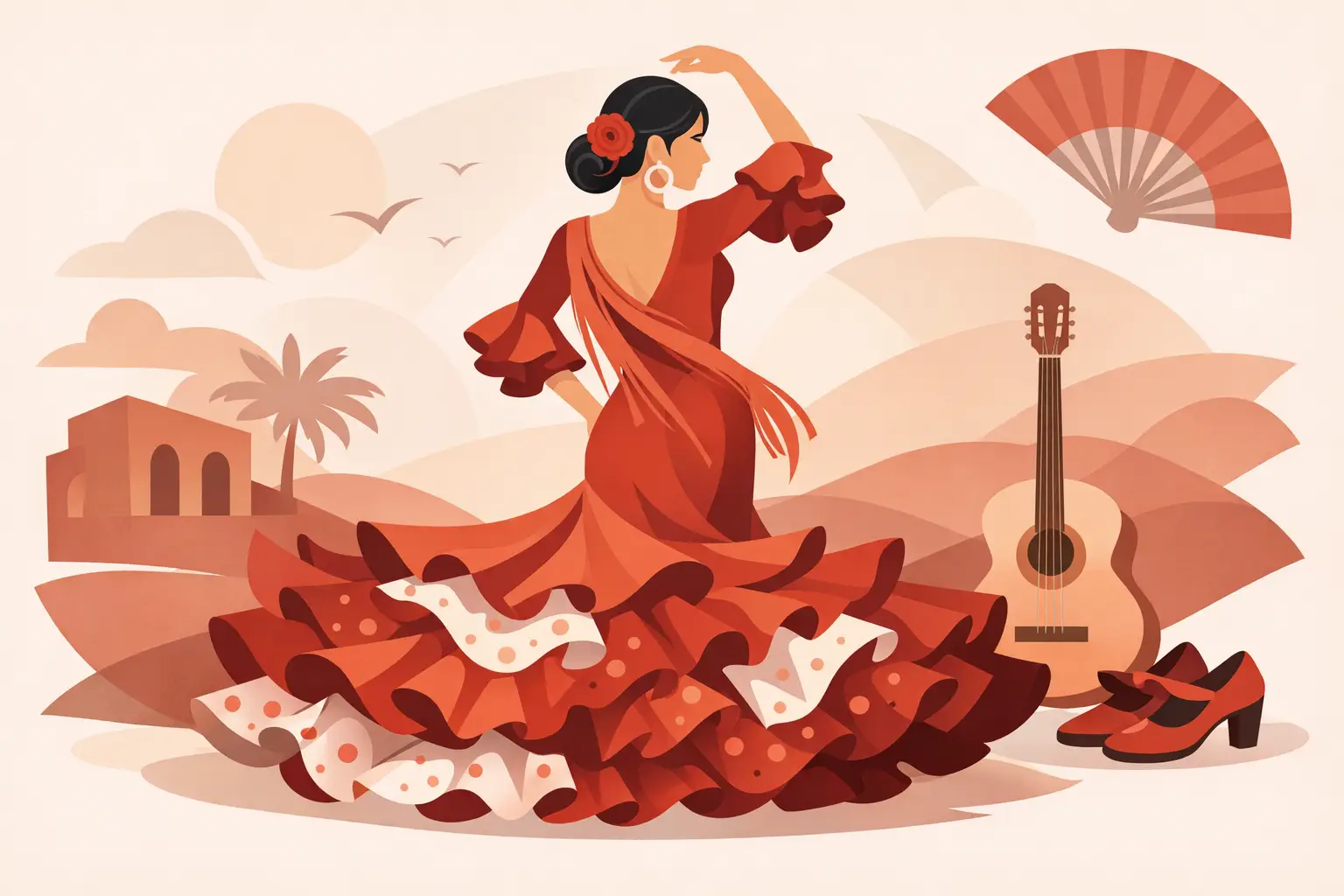
The first time you stand in front of a true flamenca dress, you notice it immediately – the shape is alive. It follows the body closely, then opens into movement through flounces, volume, and rhythm. If you have ever asked what is a flamenca dress, the short answer is this: it is the traditional Andalusian dress worn for ferias, romerías, and flamenco celebrations, designed to flatter the figure while moving beautifully with every step.
But that simple answer only tells part of the story. A flamenca dress is not just any festive dress with ruffles. It carries tradition, regional identity, and a very specific way of being made and worn. It is one of the few forms of traditional dress that continues to evolve with fashion each season while still honoring its roots.
What Is a Flamenca Dress in Traditional Terms?
A flamenca dress, also called a traje de flamenca or traje de gitana, is the iconic women’s dress associated with Andalusia, especially events such as Feria de Abril, local ferias, and many spring celebrations across southern Spain. Its defining feature is its silhouette: fitted through the torso and hips, then finished with flounces that create movement at the skirt and often at the sleeves.
Unlike a costume made for a stage performance, the flamenca dress belongs to real social life. Women wear it to celebrate, walk the fairgrounds, dance sevillanas, ride in carriages, attend family events, and take part in traditions that are deeply tied to Andalusian culture. That is why authenticity matters so much. A proper flamenca dress is made with both beauty and use in mind.
The style has traditional rules, but it is not frozen in time. Necklines shift, sleeve volumes change, prints come in and out of fashion, and each feria season brings new interpretations. That is part of its charm. It is a traditional garment, but also a living form of fashion.
The Details That Define a Flamenca Dress
When people ask what makes a dress truly flamenca, the answer is in the cut. The body of the dress is usually close-fitting. It should shape the waist, skim the hips, and feel secure without restricting movement too much. From there, the skirt opens through one or more flounces, which can start low, mid-thigh, or higher depending on the design.
Sleeves matter just as much. Some dresses have long fitted sleeves with flounces at the wrist. Others use short sleeves, cap sleeves, or sleeveless cuts for a more modern line. Necklines can be high and classic or more open and feminine. The design changes, but the balance remains the same: structure above, movement below.
Fabric also plays a major role. A flamenca dress must hold its shape well enough to support the silhouette, but it also needs fluidity so the flounces move with grace. That balance is not always obvious when shopping online, which is why dressmaking experience matters. A dress that looks beautiful hanging up can feel heavy, stiff, or unflattering when worn if the fabric and pattern cutting are not right.
Then there is print and color. Polka dots are the most recognizable option, and for good reason. They are timeless in flamenco fashion. Floral prints, solid colors, contrasting flounces, embroidery, and modern combinations also have their place. Some women want a very traditional look, while others prefer a cleaner, fashion-forward version. Neither approach is wrong. It depends on the event, personal style, and how confident the wearer feels in the dress.
More Than Ruffles: Why Fit Matters So Much
A flamenca dress is one of the most flattering garments in traditional fashion, but only when the fit is right. This is where many buyers hesitate, especially if it is their first feria dress. The dress should feel shaped, not tight in the wrong places. It should lengthen the figure, define the waist, and allow movement for walking, sitting, and dancing.
That is why made-to-measure service is so valuable in flamenco fashion. Standard sizing can work for some women, but a flamenca dress is less forgiving than an everyday summer dress. The placement of seams, the rise of the hip, the length of the torso, and the exact drop of the flounces all affect the final result.
Height also changes everything. A skirt line that flatters one woman may visually shorten another. Sleeve volume can broaden the shoulder or create elegant balance, depending on body shape. Even the neckline can change the entire personality of the dress. In an atelier setting, these details are considered from the beginning, not treated as small adjustments at the end.
For children, the same principle applies in a softer way. A girl’s flamenca dress should be charming and festive, but also comfortable enough for a long feria day. The dress still needs the essence of the traditional silhouette, just adapted to age and practicality.
Where and When a Flamenca Dress Is Worn
A true flamenca dress is closely tied to occasion. The most classic setting is the feria, where the dress is not an exception but part of the atmosphere itself. In cities and towns across Andalusia, wearing flamenca during feria is a way of participating fully in the celebration.
It is also worn for romerías and pilgrimage-related festivities, although in those cases the styling may shift slightly depending on the event. Rocío looks, for example, often involve garments and accessories that suit the day’s movement, travel, and tradition. This is where understanding the difference between a feria flamenca dress and other Andalusian festive garments becomes useful.
That said, not every ruffled dress is correct for every celebration. A heavily structured feria dress may not be the most practical choice for Rocío. A very fashion-forward design may feel perfect in one setting and out of place in another. Context matters. The best choice is not always the most dramatic one, but the one that respects both the event and the wearer.
What Is the Difference Between a Flamenca Dress and Other Flamenco Garments?
This is where many new customers need clear guidance. A flamenca dress is the fitted, flounced dress traditionally worn for feria and many Andalusian festivities. A bata rociera, while related in spirit, is often adapted for pilgrimage wear and practical movement. A falda rociera is a separate skirt, usually styled with a blouse, and gives more flexibility for certain occasions.
Stage costumes are another category entirely. Dresses made for professional performance may exaggerate elements like train length, dramatic sleeve volume, or visual contrast for theatrical effect. They can be beautiful, but they are not always ideal for feria wear.
This distinction matters because buying the right garment starts with knowing how and where you will wear it. If you are shopping for your first major celebration, it helps to work with experts who can guide you toward the correct style rather than simply the most eye-catching one.
Styling a Flamenca Dress the Right Way
A flamenca dress is never worn alone in spirit, even if the dress itself is the centerpiece. Styling completes the look. Earrings, flowers, shawls, and the right hairstyle all contribute to the final result. The goal is not excess for its own sake, but harmony.
A dress with bold print and multiple flounces may need more restraint in accessories. A simpler solid-color dress can carry a more dramatic mantón or statement earrings. Hair styling also changes the impression. A sleek low bun feels classic and polished, while a softer style may give a more modern finish.
Shoes matter more than many first-time buyers expect. Feria days are long, and elegance has to last beyond the first hour. The best flamenca styling always balances beauty with wearability.
At Astrid Höhle, this is part of what makes the atelier approach so valuable: the dress is not treated as an isolated product, but as part of a complete and authentic flamenco look.
Why the Flamenca Dress Still Matters Today
The flamenca dress remains relevant because it does something rare. It honors heritage without feeling stuck in the past. Every year, women return to this silhouette because it carries celebration, identity, and personal expression all at once.
For some, choosing a flamenca dress is deeply emotional. It marks a first feria, a family tradition, a daughter’s special outfit, or a long-awaited return to a beloved celebration. For others, it is about feeling powerful and unmistakably dressed for the moment. Both are valid.
If you came here asking what is a flamenca dress, the best answer is that it is a dress with history, craft, and presence. It is made to be worn, admired, and remembered. And when the fit is right and the style feels truly yours, you do not just wear flamenca – you feel part of the celebration before you even take the first step.
 Colección 2026
 Colección 2025
 Colección 2024
 Bata Rociera